

Every new puppy parent wonders: How long does it take to train a puppy? Is it days, weeks, or months? The answer depends on your puppy’s age, breed, personality, and your own consistency.
I’ve raised and trained dozens of puppies, some learned “sit” in a single afternoon, while others took weeks to master house training. The good news? Every puppy can learn, and most training goals are easier than you think with the right plan.
In this guide, you’ll learn:
- How long it takes to train a puppy for basic commands, housebreaking, and manners
- What affects training speed
- Real-life examples and timelines
- How to set your puppy up for success
All advice is based on real experience and trusted sources like AKC, PetMD, and VCA Hospitals.

Quick Answer: How Long Does It Take to Train a Puppy?
Most puppies learn basic commands like “sit” and “down” in a few days to a week with daily practice. House training usually takes 2–4 weeks of consistency, but full reliability can take up to 3–6 months. Social skills and leash manners may take several months to a year.
Every puppy is different, but with patience and a plan, you’ll see progress every week.
What Affects Puppy Training Speed?
Several factors change how quickly your puppy learns:
1. Age
- Puppies under 8 weeks are just starting to learn about the world.
- 8–16 weeks is the “golden window” for fast learning.
- Older puppies and rescues can still learn, but may need more time to adjust.
2. Breed and Temperament
- Working breeds (Border Collies, Labs) often pick up commands quickly.
- Independent breeds (Huskies, Shiba Inus) may take longer.
- Shy or nervous puppies need extra patience.
3. Consistency
- Daily, short training sessions work best.
- Everyone in the home should use the same cues and rules.
4. Training Method
- Positive reinforcement (treats, praise) speeds up learning.
- Harsh corrections or yelling slow things down and can cause fear.
5. Environment
- Quiet, distraction-free spaces help puppies focus.
- Too much noise or chaos makes learning harder.
6. Health and Energy
- Tired, hungry, or sick puppies won’t learn well.
- Make sure your puppy is healthy and has had a potty break before training.
7. Your Experience
- First-time owners may need more time to learn how to teach.
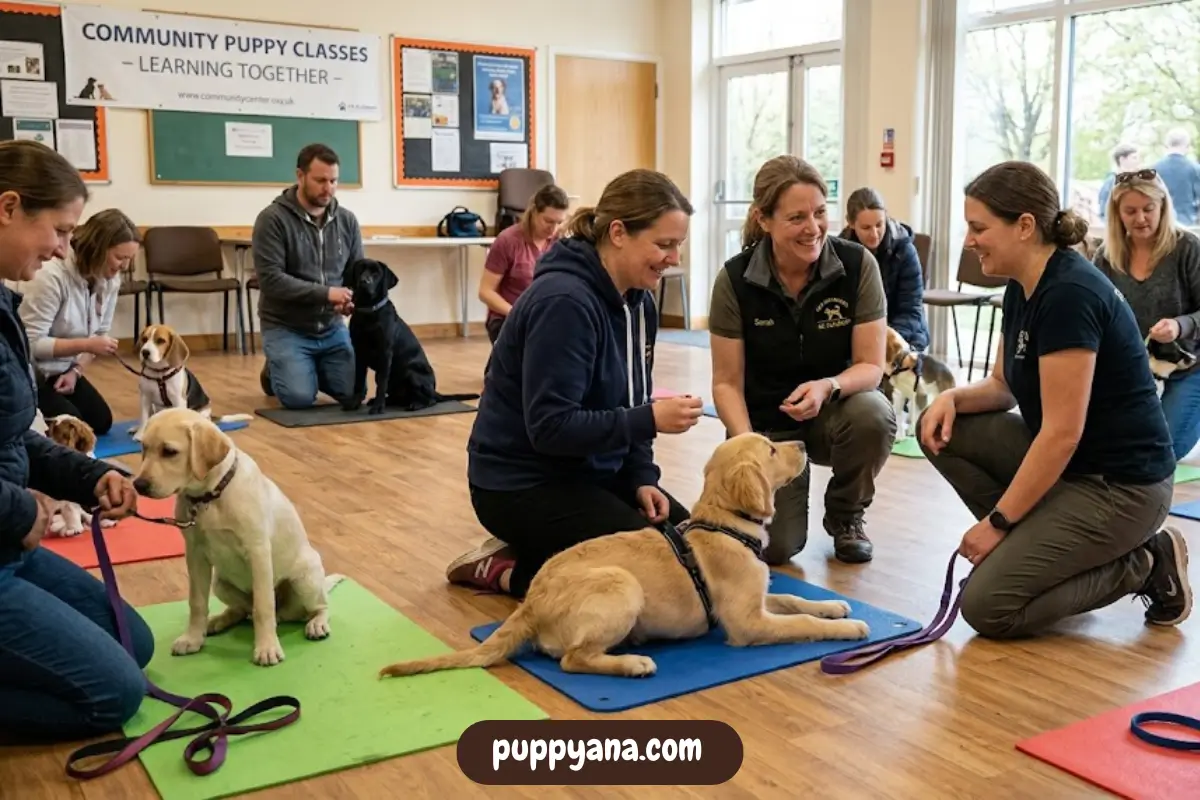
- Puppy classes or help from a trainer can speed up the process.
How to Speed Up Puppy Training Progress
If you want your puppy to learn faster, focus on these proven strategies:
- Train every day: Short, daily sessions (5–10 minutes) are better than long, occasional ones.
- Use high-value rewards: Find treats or toys your puppy loves most.
- Keep it positive: Praise and reward good behavior; ignore or redirect mistakes.
- Practice in different places: Start in a quiet room, then add distractions as your puppy improves.
- End on a win: Always finish training with a success, even if it’s a simple “sit.”
Real-life tip: When I switched from dry kibble to tiny bits of chicken for training, my stubborn puppy learned “down” in two days instead of two weeks.
How Long Does It Take to Teach Basic Commands?
Sit, Down, and Name Recognition
- Most puppies learn “sit” in 1–3 days with 5-minute sessions.
- “Down” and “come” may take a week or two.
- Name recognition is often learned in the first few days.
Real-life example: My foster puppy, Luna, learned “sit” in one afternoon using treats and a hand signal. “Down” took three days of practice, but she got it by the end of the week.
Stay and Leave It
- “Stay” and “leave it” require more impulse control.
- Expect 1–2 weeks for a reliable “stay” of 10 seconds or more.
- “Leave it” can take 2–3 weeks to master with distractions.
How Long Does House Training Take?
House training (potty training) is one of the biggest concerns for new puppy owners.
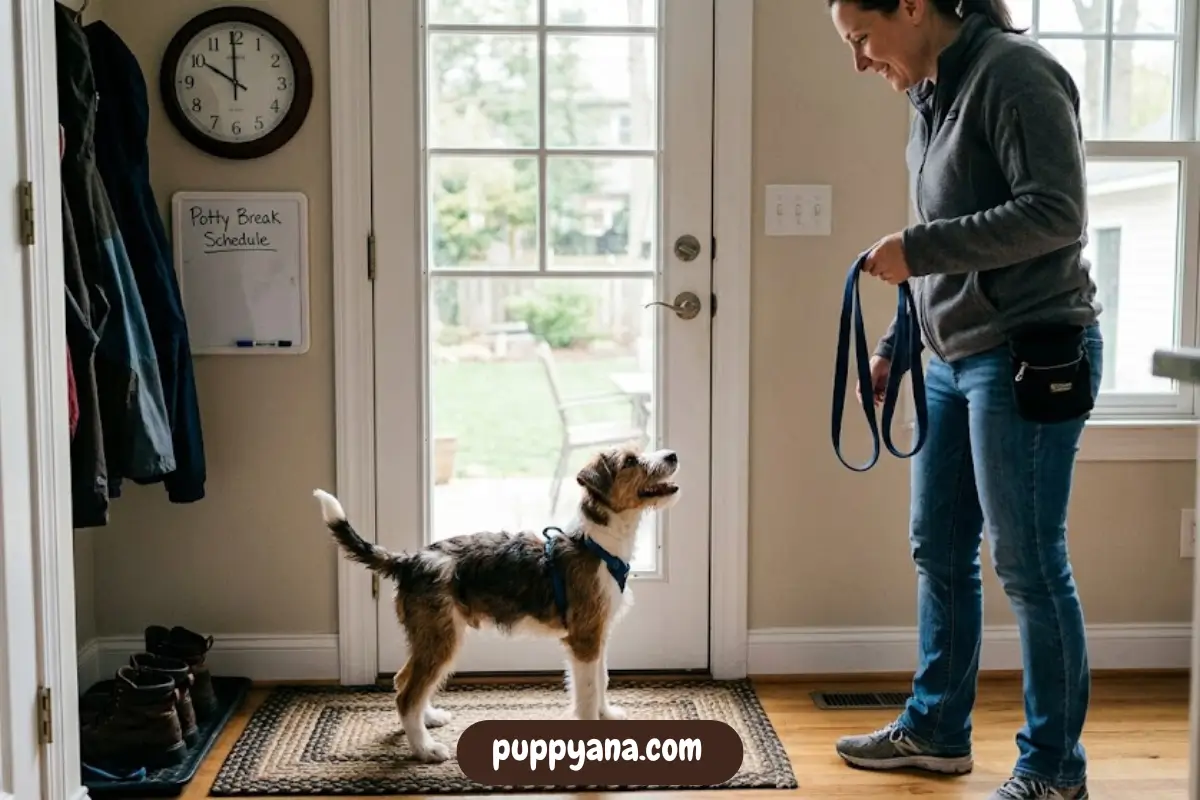
- Most puppies can be mostly house trained in 2–4 weeks with a strict schedule.
- Full reliability (no accidents for a month) may take 3–6 months.
- Small breeds and young puppies may need more frequent potty breaks.
Tips for faster house training:
- Take your puppy out every 1–2 hours, after meals, naps, and play.
- Praise and reward immediately after they go outside.
- Supervise indoors and use a crate when you can’t watch them.
For more, see AKC’s house training guide.
How Long Does Crate Training Take?
Crate training helps with housebreaking, travel, and teaching your puppy to settle. Most puppies learn to relax in a crate within 1–2 weeks if you go slowly and keep it positive.
Steps for faster crate training:
- Feed meals in the crate with the door open.
- Toss treats or toys inside to make it a happy place.
- Start with short periods (5–10 minutes) and build up.
- Never use the crate for punishment.
Some puppies may whine or bark at first. Stay calm and reward quiet moments. If your puppy panics or refuses to enter, slow down and try again later.
For more, see VCA’s crate training advice.
How Long Does Leash Training Take?
Leash manners are a work in progress for most puppies.
- Most puppies learn to walk on a loose leash in 2–4 weeks of daily practice.
- Pulling, lunging, or leash biting may take longer to fix.
- Start with short, quiet walks and gradually add distractions.
My own dog, Max, took a month to stop pulling on walks. We used treats, a front-clip harness, and lots of patience.
For more leash tips, check PetMD’s leash training basics.
How Long Does Socialization Take?
Socialization is about exposing your puppy to new people, dogs, places, and sounds.
- The best window is 8–16 weeks old, but you can keep socializing for life.
- Aim for one new experience a day (car rides, meeting a neighbor, hearing a vacuum).
- Shy puppies may need more time and gentle encouragement.
PuppyAna recommends keeping a “socialization checklist” and rewarding calm, curious behavior in new situations.

How Long Until My Puppy Is Fully Trained?
“Fully trained” means different things to different people. For most families, it means:
- House trained (no accidents)
- Knows basic commands (sit, down, come, stay)
- Walks nicely on leash
- Can be left alone for short periods
- Is polite with people and other dogs
Most puppies reach this level by 6–12 months with daily practice. Some skills (like off-leash recall or advanced tricks) may take longer.
Remember, training is a journey—not a race. Even adult dogs keep learning!
How to Tell If Your Puppy Is Making Progress
It’s normal to wonder if your puppy is really learning. Here’s how to spot progress:
- Fewer accidents: House training is working if you see fewer messes each week.
- Faster response: Your puppy sits or comes when called more quickly.
- Longer focus: Training sessions last longer before your puppy gets distracted.
- Better manners: Less jumping, biting, or barking for attention.
- More confidence: Your puppy explores new places and meets new people calmly.
Example: I kept a simple training journal for my foster pups. Seeing “no accidents this week” or “learned stay for 10 seconds” helped me stay motivated.
Celebrate every small win, progress is often slow and steady!
What If My Puppy Isn’t Learning Fast Enough?
Some puppies take longer to learn, and that’s okay.
- Go back to basics: shorter sessions, higher-value treats, fewer distractions.
- Rule out health issues if your puppy seems tired or unfocused.
- Ask for help from a positive trainer or puppy class.
I once worked with a rescue puppy who took a month to learn “sit.” With patience and daily practice, she caught up and became a star student.

Conclusion
So, how long does it take to train a puppy? Most puppies learn basics in days or weeks, but full manners and reliability take months of practice. Every dog is different, and progress is never perfectly linear.
Stay patient, keep sessions short and fun, and celebrate every small win. With time, your puppy will become the well-mannered companion you’ve always wanted.
Frequently Asked Questions
Can you train a puppy in a week?
You can teach basics like “sit” and “name” in a week, but full training takes months.
What age is best to start training a puppy?
Start as soon as you bring your puppy home—usually 8 weeks old.
How long should training sessions be?
Keep sessions short—5 to 10 minutes, 2–3 times a day.
Why does my puppy forget what they learned?
Puppies need repetition and reminders. Go back to basics and reward success.
Do some breeds take longer to train?
Yes. Independent or stubborn breeds may need more patience, but all puppies can learn.
Is it ever too late to train a puppy?
No! Older puppies and even adult dogs can learn new skills with the right approach.